
How to Tell Your Family or Someone You Love That You're a Victim of Image Abuse
You don't have to say it perfectly. A calm, practical guide to telling family or someone you love that you're a victim of image-based sexual abuse.
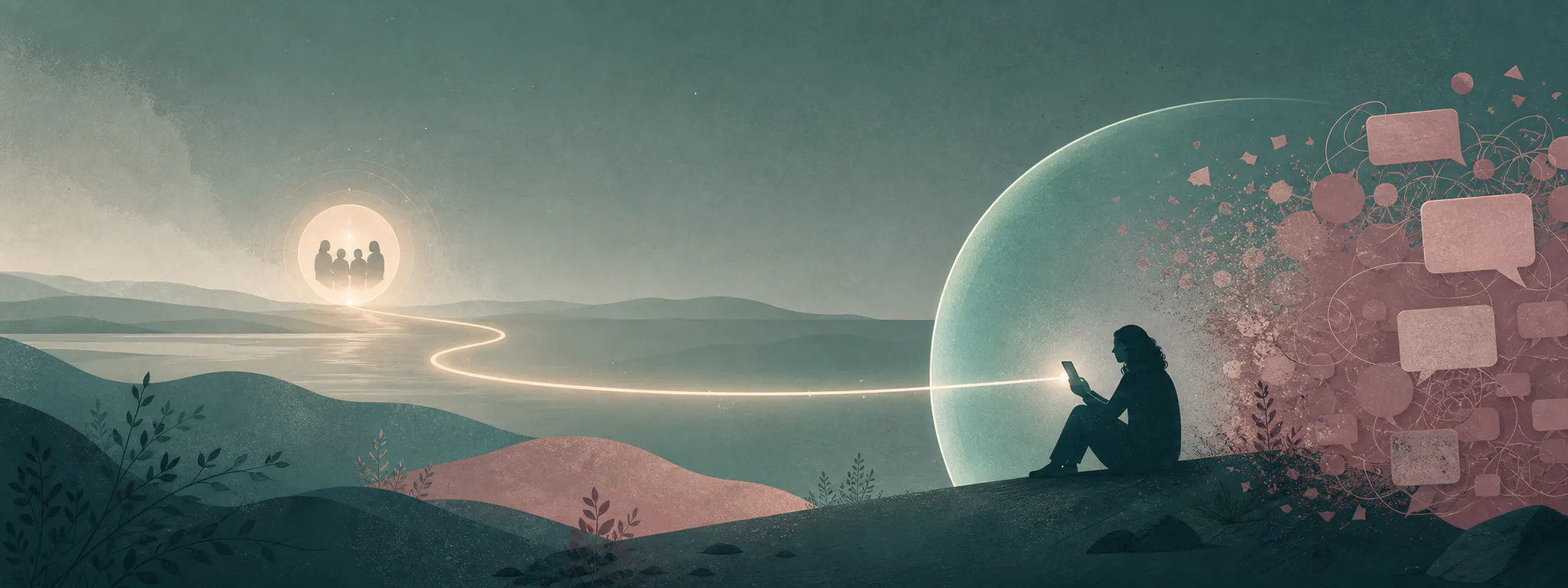
You don't have to tell everyone, or tell them everything
Telling someone is a choice, not a requirement. You're in charge of who you tell, when, and how much. If a relative pushes for details you don't want to give, "I'm not ready to talk about that part yet" is a complete answer.
Why telling someone helps
In the largest study of its kind, about 1 in 5 of 16,000+ adults across 10 countries reported experiencing image-based sexual abuse, and nearly 1 in 3 victims never told anyone. Telling one trusted person gives you someone to help with next steps and to sit with you on hard days.
How to choose the right person, and what to say
A safe first person reacts calmly, keeps things private, and follows your lead. If no one at home feels safe, a trained counselor can be your first call; the Cyber Civil Rights Initiative helpline is 1-844-878-2274. A script that works: "I need to tell you something hard, and I need you on my side. Someone shared private images of me without my permission." A text counts too.
If the image is fake or AI-generated
You still deserve support. A fake image is still real harm; it's your face, your name, your reputation. The federal TAKE IT DOWN Act covers non-consensual intimate images whether real or AI-generated.
Tell them what you need
Most bad reactions come from people who care but don't know how to help. Be specific: "sit with me," "help me file the reports," "please don't go looking for the images," "don't tell anyone else without asking me first."
If the reaction isn't what you hoped for
That reaction is about their limits, not your worth. You're allowed to end the conversation and go to someone else who can hold it; one hard reaction doesn't mean the next person will react the same way.



Ready when you are.
If you'd like to take action on what you've read, Protect Privacy can help.
Or keep exploring — there's no rush.

Built with survivor-informed, privacy-first design.
Your dignity and control come first.
Get the app